How AI Is Changing Operations for UK SMEs in 2026
AI has moved from hype to practical tool
Two years ago, the conversation around AI for small businesses was mostly theoretical. The tools were expensive, difficult to implement, and required specialist knowledge to get value from them.
That has changed rapidly. In 2026, there are practical, affordable AI tools that SMEs can deploy without hiring a data scientist or investing six figures in custom development.
But with so many options and so much marketing noise, the real question for business owners is: what actually works, and where should I focus my limited time and budget?
What AI can realistically do for a small business today
Let us set expectations honestly. AI is not going to replace your team or run your business on autopilot. What it can do is handle specific, well-defined tasks that currently eat into your team's productive time.
Intelligent document processing
AI can now read, categorise, and extract data from documents with remarkable accuracy. Invoices, receipts, contracts, and forms that previously required manual data entry can be processed automatically.
For businesses that handle high volumes of paperwork, this alone can save dozens of hours per month.
Customer communication support
AI-powered chatbots and email assistants have matured significantly. They can handle routine enquiries, draft initial responses for review, and triage incoming requests to the right team member.
The key is using them for what they are good at, handling common, predictable queries, while routing complex or sensitive issues to humans.
Demand forecasting
For businesses that manage inventory or plan resource allocation, AI-powered forecasting tools can analyse historical data to predict future demand more accurately than traditional methods.
This is particularly valuable for seasonal businesses or those with variable workloads, where over-staffing and under-staffing both carry significant costs.
Data analysis and insights
Perhaps the most broadly applicable use of AI is in making sense of business data. Tools like Microsoft Copilot, integrated directly into the Office suite many SMEs already use, can summarise trends, flag anomalies, and generate insights from your existing data.
Where SMEs should not use AI yet
Being honest about limitations is just as important as understanding capabilities. There are areas where AI is not yet reliable enough for SMEs to depend on:
- Critical financial decisions should always involve human judgement and professional advice
- Complex customer relationships benefit from genuine human interaction, not automated responses
- Legal and compliance matters require qualified human oversight, even if AI can assist with research
A practical approach to getting started
The businesses that get the most value from AI share a common approach. They do not try to transform everything at once. Instead, they follow a structured process:
- Audit your current operations to identify where time is being spent on repetitive, rule-based tasks
- Prioritise by impact and focus on the one or two areas where automation would save the most time or reduce the most errors
- Start with proven tools rather than cutting-edge technology. The most reliable AI solutions are those that have been refined through widespread use
- Measure results rigorously. Track time saved, error rates reduced, and customer satisfaction before and after implementation
The access gap is closing
Historically, the operational tools and strategies available to large enterprises were simply out of reach for SMEs. The cost, complexity, and required expertise created a gap that small businesses could not bridge.
AI is rapidly closing that gap. Tools that would have cost hundreds of thousands of pounds to implement five years ago are now available as affordable monthly subscriptions. The expertise required to use them has dropped from specialist data science to basic digital literacy.
For UK SMEs, this represents an enormous opportunity. Those that act now to integrate AI into their operations thoughtfully will have a significant competitive advantage over those that wait.
Finding your starting point
The challenge is not a lack of available tools. It is knowing which tools will make the biggest difference for your specific business. That starts with understanding where your current operational bottlenecks are.
Our free Operational Health Check gives you a clear, data-driven picture of your top operational challenges and where AI and automation could have the greatest impact. It takes five minutes, and you will walk away with actionable recommendations tailored to your business.
Emmy Mukasa
Founder, AxioFlow
Ready to put this into practice?
Take our free 5-minute Operational Health Check and get personalised recommendations to streamline your business.
Take the Health CheckYou might also like
What Most Small Businesses Don't Realise About AI
It is not coming for your job. It is not only for tech companies. And it does not cost a fortune to start. Here is what AI actually looks like inside a small business — and why the gap between businesses using it and those not is widening faster than most people think.
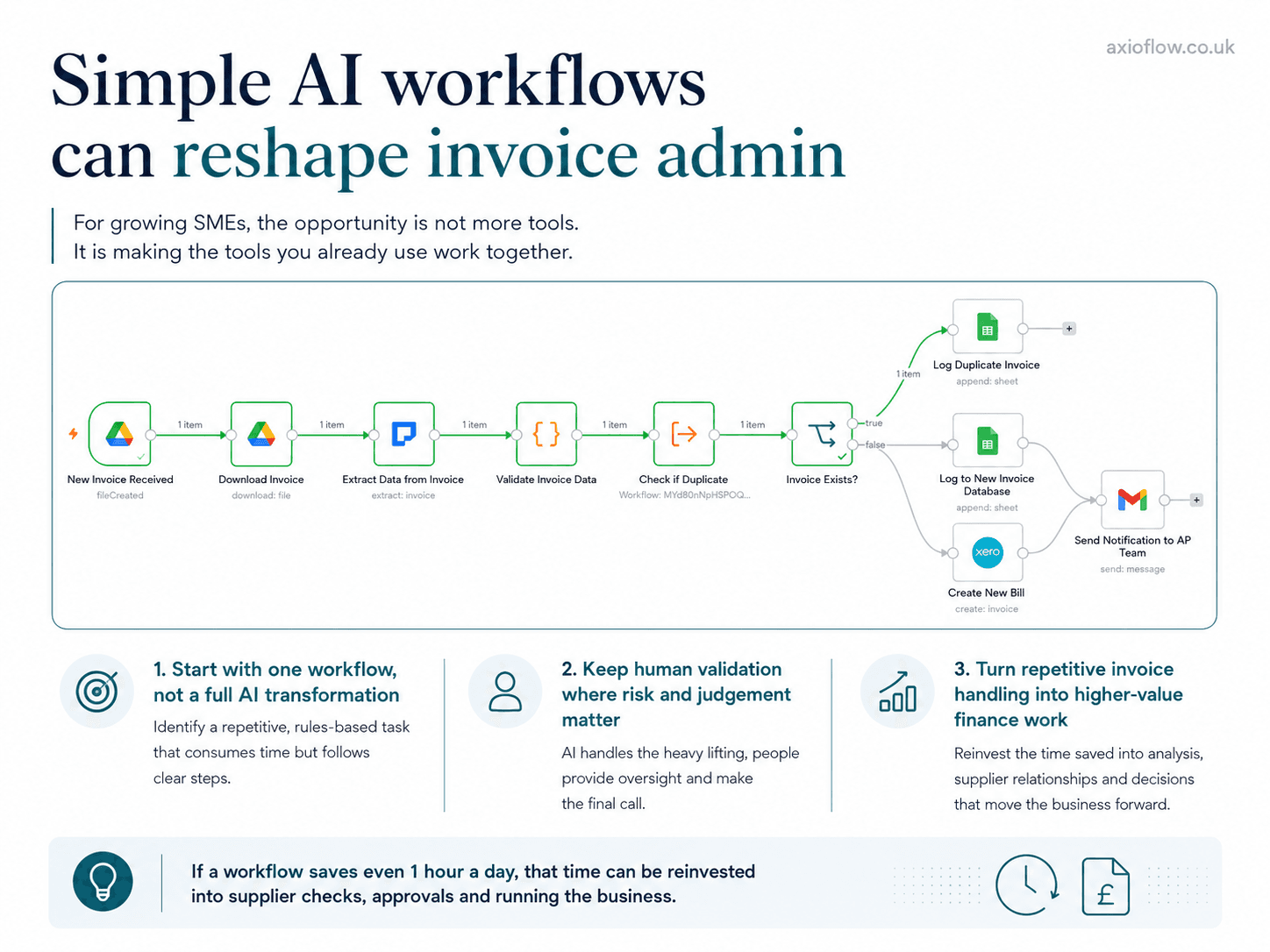
How a Simple Invoice Workflow Can Give SMEs Hours Back Every Week
Invoice processing becomes painful not because any single task is hard, but because the same small manual steps repeat every day. Here is what a better workflow looks like.
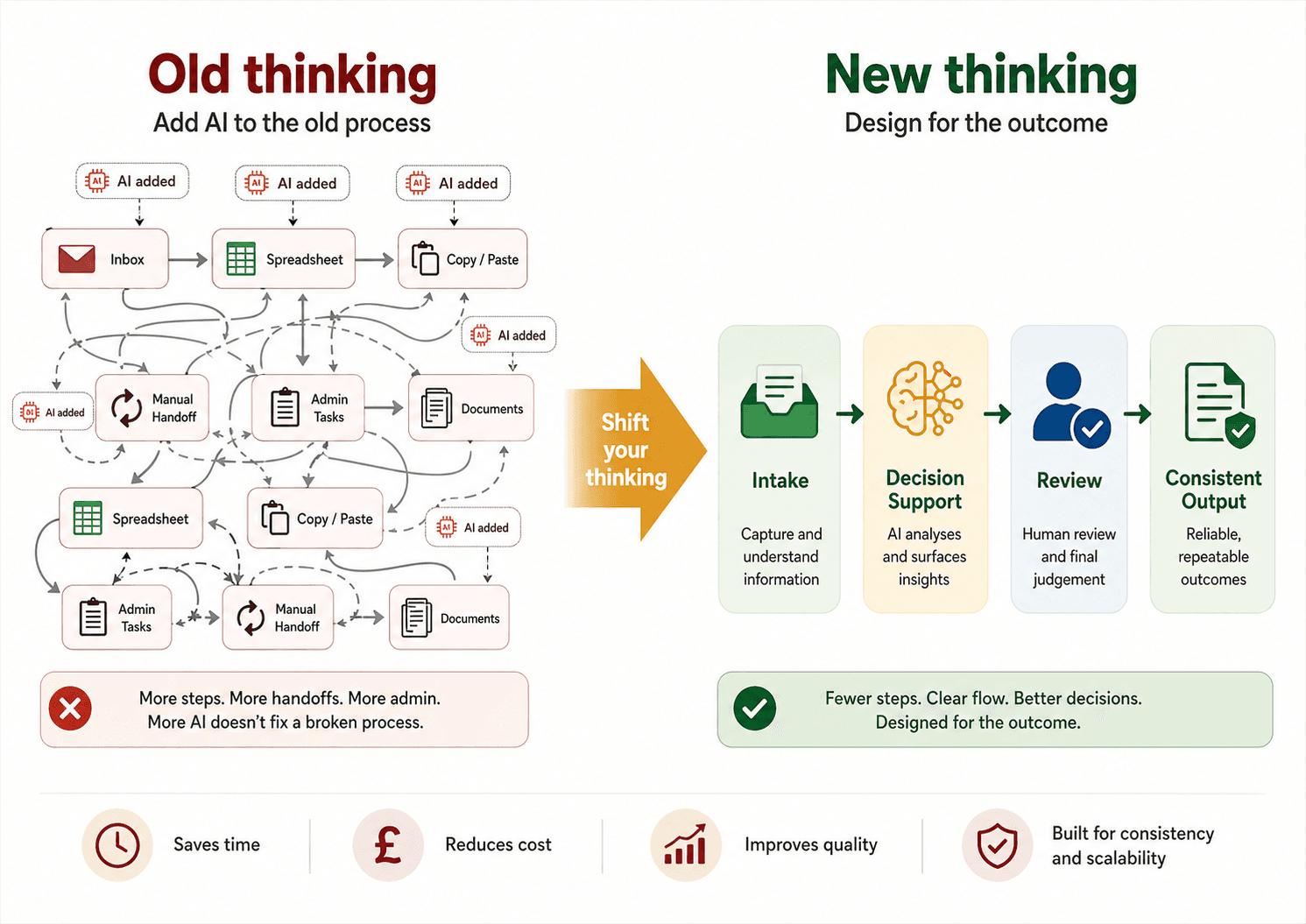
AI Adoption Needs a Mindset Shift, Not Just a New Tool
For SMEs, successful AI adoption starts by rethinking workflows from the ground up, rather than simply adding AI to existing manual processes.